
SQL vs NoSQL: Which to Choose for Your Project?
In the world of software development, one of the most critical decisions is choosing between SQL (relational) and NoSQL (non-relational) databases. This choice can make the difference between a scalable and efficient system, or one full of limitations.
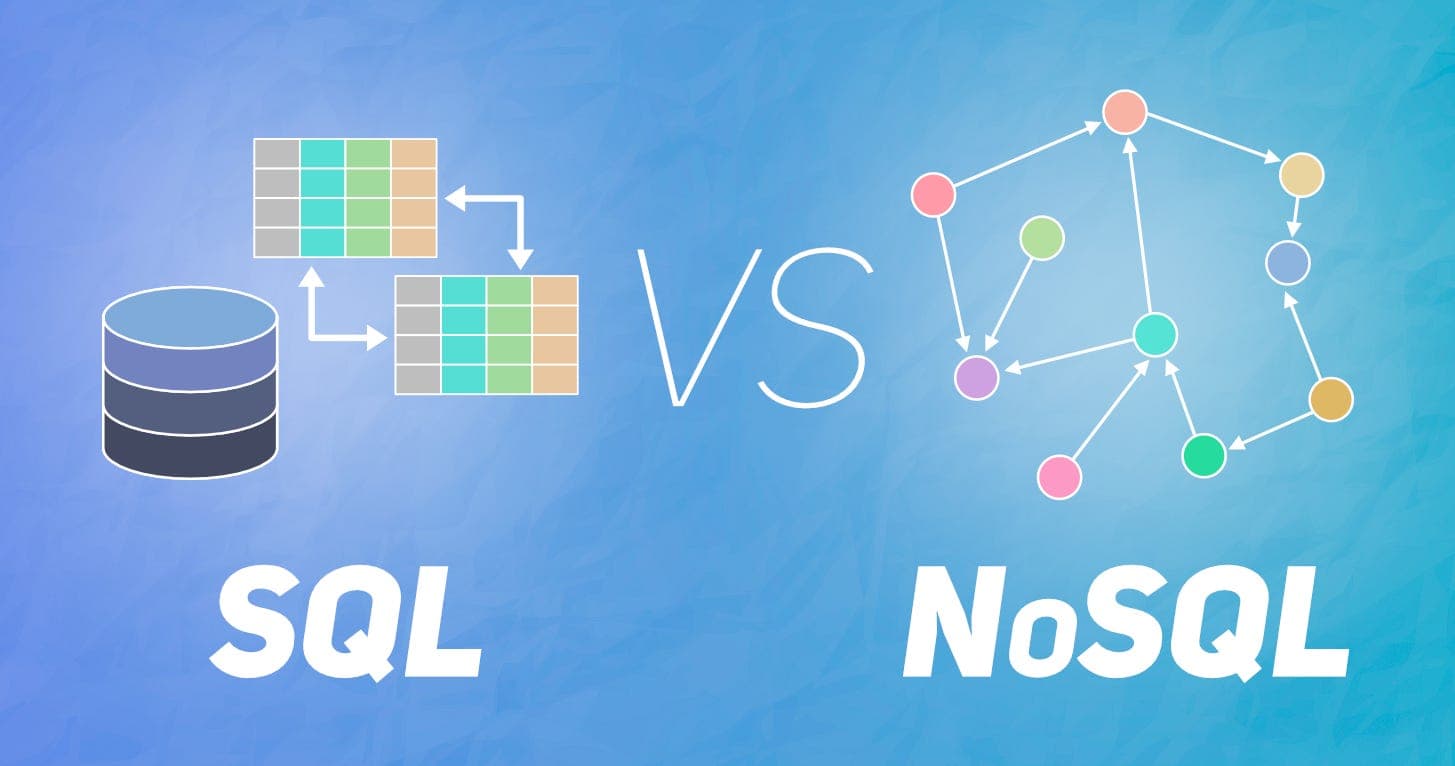
SQL vs NoSQL: Which to Choose for Your Project?
In the world of software development, one of the most critical decisions is choosing between SQL (relational) and NoSQL (non-relational) databases. This choice can make the difference between a scalable and efficient system, or one full of limitations.
But what makes them different? When should you use each one? Let's analyze it in depth.
SQL: Relational Databases
SQL (Structured Query Language) databases are like perfectly organized libraries. Data is stored in tables with defined relationships, similar to interconnected spreadsheets.
Popular examples include MySQL, PostgreSQL, Oracle, and SQL Server. Some key features are:
- Rigid structure: Well-defined schema with tables, columns, and relationships
- ACID: Guarantees Atomicity, Consistency, Isolation, and Durability
- Complex queries: Powerful SQL language for advanced operations
- Referential integrity: Well-defined relationships between tables
 -- SQL query example
 SELECT u.name, o.total
 FROM users u
 JOIN orders o ON u.id = o.user_id
 WHERE o.created_at > '2023-01-01'
 ORDER BY o.total DESC;
NoSQL: Non-Relational Databases
NoSQL databases are like flexible closets where you can store information in different ways. They don't follow the relational table model and are more flexible regarding data structure.
Examples include MongoDB, Cassandra, Redis, and DynamoDB. Their main features are:
- Flexibility: No fixed schema, adaptable to changes
- Horizontal scalability: Easy distribution across multiple servers
- Performance: Optimized for specific operations
- Variety of models: Documents, key-value, graphs, wide-column
 // MongoDB document example
 {
   _id: "user123",
   name: "Ana Pérez",
   email: "ana@example.com",
   orders: [
     {id: "ord1", total: 100, date: "2023-05-15"},
     {id: "ord2", total: 200, date: "2023-06-20"}
   ]
 }
Technical Comparison
⭐ SQL Advantages
- Consistency: Data is always valid and consistent
- Complex queries: JOINs, subqueries, aggregations
- Maturity: Technology proven for decades
- Standardization: Well-defined SQL language
⚠ Disadvantages
- Vertical scalability: Growth limitations
- Rigidity: Schema changes can be costly
- Performance: Can be slow with large volumes
⭐ NoSQL Advantages
- Scalability: Easy distribution across clusters
- Flexibility: Adaptable to frequent changes
- Performance: Optimized for specific operations
- Variety: Different models for different needs
⚠ Disadvantages
- Eventual consistency: Doesn't always guarantee ACID
- Limited queries: No complex JOINs
- Maturity: Less standardization between products
When to Use Each?
✅ Use SQL when...
- Your data is structured and stable
- You need complex transactions (e.g., banking systems)
- You require ad-hoc queries with multiple relationships
- Data integrity is critical
✅ Use NoSQL when...
- Your data is semi-structured or unstructured
- You need to scale horizontally (e.g., massive web applications)
- You have high-performance requirements for read/write operations
- Your data schema changes frequently
Typical Use Cases
| Application Type | Recommendation | Reason |
|---|---|---|
| Accounting/financial system | SQL | Need for ACID transactions and strict consistency |
| Social network | NoSQL | Horizontal scalability and semi-structured data |
| ERP/CRM | SQL | Complex relationships between entities |
| IoT application | NoSQL | High data volume and schema flexibility |
| E-commerce | Both (hybrid) | SQL for transactions, NoSQL for catalog/products |
Conclusion: Which to Choose?
📌 Final recommendation:
- Choose SQL when you need strong consistency, complex transactions, and a well-defined schema
- Choose NoSQL when you prioritize scalability, flexibility, and high performance with large data volumes
- Consider a hybrid approach for complex applications that require the best of both worlds
💡 There's no one-size-fits-all solution: The best option depends on your specific requirements, data volume, access patterns, and growth needs.
📢 Do you prefer SQL or NoSQL for your projects? Share your experience!
🔗 If you found this comparison useful, share it with other developers. 🚀